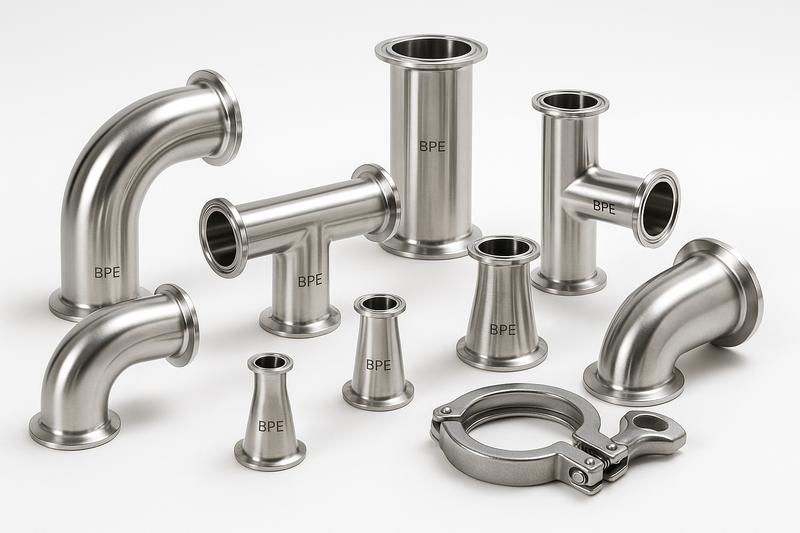
Sanitary fittings are essential components in hygienic piping systems used in food processing, beverage production, pharmaceutical manufacturing, biotechnology, and other industries where cleanliness is critical. These fittings connect pipes, valves, tanks, pumps, and processing equipment while helping maintain product quality and system hygiene.
Stainless steel sanitary fittings are widely used because of their corrosion resistance, durability, cleanable surfaces, and suitability for demanding processing environments.
In this guide, we explain what sanitary fittings are, their common types, materials, connection methods, applications, and how to choose the right fittings for your piping system.
What Are Sanitary Fittings?
Sanitary fittings are specially designed pipe connection components used in systems that require hygienic processing conditions. They help transport liquids and, in suitable systems, gases while supporting effective cleaning and reducing the risk of product contamination.
Common sanitary fittings include elbows, tees, reducers, crosses, unions, ferrules, and clamps. These components are typically manufactured from stainless steel and designed for use in food-grade or other hygienic piping systems.
Compared with ordinary industrial pipe fittings, sanitary fittings are selected with greater attention to surface finish, cleanability, material compatibility, and connection design.
Key Features of Stainless Steel Sanitary Fittings
1. Corrosion Resistance
Stainless steel sanitary fittings are designed to resist corrosion under suitable operating conditions. Grade 304 stainless steel is widely used in many general hygienic applications, while 316L stainless steel is often selected for environments requiring improved resistance to certain corrosive media.
Material selection should consider the process fluid, cleaning chemicals, temperature, and operating conditions.
2. Hygienic Surface Finish
A suitable surface finish helps reduce areas where product residues may accumulate and supports effective cleaning. For hygienic processing, the required finish depends on the product, cleaning procedure, and applicable industry standards.
3. Reliable Connections
Sanitary fittings are available with different connection options, including clamp, welded, and threaded connections where appropriate. The right choice depends on installation requirements, pressure conditions, maintenance needs, and system design.
4. Easy Maintenance
Many sanitary piping systems use removable connections to simplify inspection, cleaning, and component replacement. Properly selected fittings can help reduce maintenance time and support efficient production.
Common Types of Sanitary Pipe Fittings
Sanitary Elbows
Sanitary elbows change the direction of flow within a piping system. They are commonly available in 45-degree and 90-degree configurations, depending on the system design.
Sanitary Tees
Sanitary tees connect a main pipe to a branch line. They are used in processing systems that distribute liquids to different tanks, machines, or production stages.
Sanitary Reducers
Sanitary reducers connect pipes of different diameters. They help accommodate changes in piping size and should be selected to suit the required flow characteristics and installation design.
Sanitary Clamps and Ferrules
Sanitary clamps and ferrules provide removable connections between compatible components. They are widely used where convenient disassembly and maintenance are important.
Sanitary Unions
Sanitary unions connect piping sections or equipment using a detachable joint. The design and sealing arrangement should match the system’s hygiene and operating requirements.
Which Stainless Steel Grade Should You Choose?
304 Stainless Steel
304 stainless steel is commonly used for general food processing equipment, water-related applications, and many hygienic piping systems. It offers a useful balance of corrosion resistance, formability, and cost.
316L Stainless Steel
316L stainless steel contains molybdenum and has a low carbon content. It is often preferred for applications involving more demanding corrosion conditions, including certain chemical cleaning environments.
The correct grade depends on the process medium, chloride exposure, cleaning chemicals, temperature, and applicable specifications. Neither grade is suitable for every environment.
Applications of Sanitary Fittings
Sanitary fittings are used across a wide range of industries.
- Food processing: Hygienic product transfer lines, processing equipment, and storage systems.
- Dairy production: Milk processing, transfer piping, and compatible cleaning systems.
- Beverage manufacturing: Water, juice, and other beverage processing lines.
- Pharmaceutical manufacturing: Suitable process piping and equipment connections designed for the required cleanliness level.
- Biotechnology: Hygienic process systems where material compatibility and cleanability are essential.
- Cosmetics and personal care: Production and transfer systems for compatible liquid formulations.
Actual suitability depends on the complete system design, material specifications, cleaning procedures, and applicable regulations.
How to Choose the Right Sanitary Fittings
Before purchasing sanitary fittings, consider the following factors:
- Material grade: Choose 304 or 316L stainless steel based on corrosion requirements and process conditions.
- Pipe size: Confirm the outside diameter, wall thickness, and applicable dimensional standard.
- Connection type: Select clamp, welded, union, or another suitable connection for the installation.
- Surface finish: Specify the required finish and any relevant inspection or documentation requirements.
- Operating conditions: Confirm pressure, temperature, media compatibility, and cleaning requirements.
- Supplier capability: Check dimensional consistency, material traceability, quality control, and the ability to meet custom requirements.
Providing these details when requesting a quotation can help suppliers recommend suitable products more efficiently.
Why Choose a Reliable Sanitary Fittings Manufacturer?
A qualified supplier should be able to provide clear product specifications, consistent manufacturing quality, suitable material options, and responsive technical support.
When evaluating a sanitary fittings manufacturer, ask about available sizes, stainless steel grades, connection types, surface finish options, inspection procedures, and relevant material documentation.
For custom projects, confirm the required standards and tolerances before production.
Frequently Asked Questions
What is the difference between sanitary fittings and standard pipe fittings?
Sanitary fittings are designed for hygienic processing applications, with particular attention to cleanability, surface finish, material compatibility, and connection design. Standard industrial fittings may prioritize other requirements depending on their intended use.
Are sanitary fittings available in 304 and 316L stainless steel?
Yes. Both grades are commonly available for sanitary piping applications. The appropriate grade depends on the process medium, corrosion conditions, cleaning chemicals, and project specifications.
What are the common sanitary fitting connection types?
Common options include clamp connections, welded connections, and certain threaded or union connections. Availability depends on the fitting design and application.
How do I request a quotation for sanitary fittings?
Provide the fitting type, material grade, size, connection type, quantity, operating conditions, and any required drawings or standards. This information helps the supplier prepare a more accurate quotation.
Request a Quote for Stainless Steel Sanitary Fittings
Looking for stainless steel sanitary fittings for your next project?
Contact our team to discuss your product requirements, available specifications, and quotation needs. Share your fitting type, material, dimensions, connection method, and quantity so we can better understand your application.
Contact us today to discuss your sanitary piping requirements.
