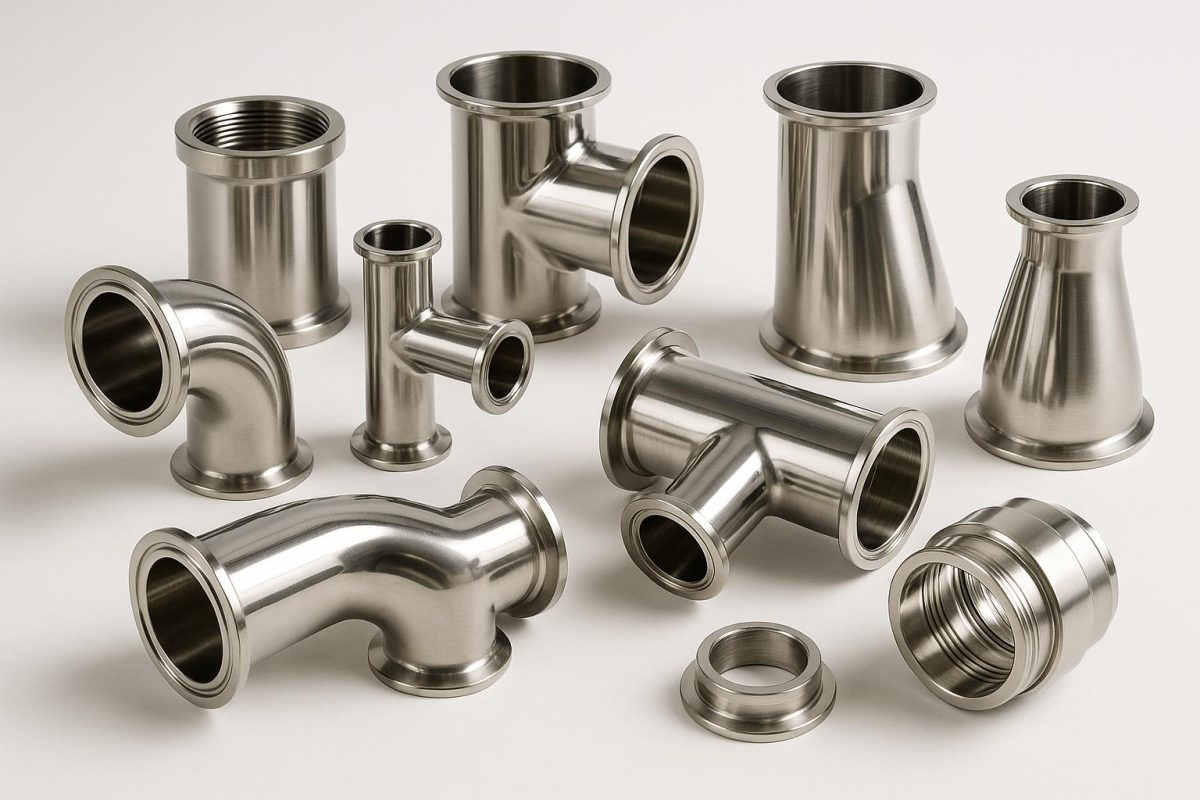
Stainless steel sanitary fittings are essential components in food processing, beverage production, pharmaceutical manufacturing, dairy processing, and other hygienic industries.
When choosing sanitary pipe fittings, two of the most common material options are 304 and 316L stainless steel. Although they look similar, they have different chemical compositions, corrosion resistance properties, and application suitability.
So, which material should you choose for your sanitary piping system?
In this article, we explain the main differences between 304 and 316L stainless steel sanitary fittings and how to select the right material for your application.
1. What Is 304 Stainless Steel?
304 stainless steel is one of the most widely used austenitic stainless steel grades. It offers good corrosion resistance, formability, and weldability.
It is commonly used in general food processing equipment, beverage production lines, water transportation systems, and industrial piping applications.
Key characteristics of 304 stainless steel:
- Good general corrosion resistance
- Excellent formability and weldability
- Good mechanical properties
- Suitable for many food and beverage applications
- Cost-effective for general industrial use
304 stainless steel is a practical choice for applications that do not involve particularly aggressive corrosive environments.
2. What Is 316L Stainless Steel?
316L stainless steel is a low-carbon austenitic stainless steel containing molybdenum.
The addition of molybdenum improves its resistance to pitting and crevice corrosion, particularly in environments containing chlorides.
316L is commonly selected for pharmaceutical equipment, chemical processing systems, dairy production facilities, and demanding hygienic piping applications.
Key characteristics of 316L stainless steel:
- Improved resistance to chloride-related corrosion
- Low carbon content
- Good weldability
- Suitable for demanding hygienic environments
- Good resistance to many corrosive process media
316L stainless steel is often preferred when the operating environment requires additional corrosion resistance.
3. Main Differences Between 304 and 316L Stainless Steel
The biggest differences are their chemical composition and corrosion resistance.
| Property | 304 Stainless Steel | 316L Stainless Steel |
|---|---|---|
| Chromium | 18–20% | 16–18% |
| Nickel | 8–10.5% | 10–14% |
| Molybdenum | Not intentionally added | 2–3% |
| Maximum Carbon | 0.08% | 0.03% |
| Corrosion Resistance | Good | Improved in many chloride environments |
| Typical Cost | Lower | Higher |
Note: Chemical composition ranges are typical ASTM/AISI grade ranges. Actual specifications should be confirmed against the applicable material standard and product certificate.
4. Which Material Is Better for Food Processing?
Both 304 and 316L stainless steel are widely used in food processing applications.
The best choice depends on the product being processed, cleaning chemicals, operating temperature, and environmental conditions.
When to Choose 304 Stainless Steel
304 stainless steel is generally suitable for:
- General food processing equipment
- Drinking water piping systems
- Beverage production lines
- General-purpose sanitary connections
- Applications with relatively mild cleaning environments
It offers a practical balance between corrosion resistance and purchasing cost.
When to Choose 316L Stainless Steel
316L stainless steel is worth considering for:
- Dairy processing systems
- Pharmaceutical manufacturing
- Chemical processing equipment
- Applications involving chloride exposure
- Hygienic piping systems with demanding corrosion requirements
For these applications, its additional corrosion resistance may help improve long-term equipment reliability.
However, neither material is immune to corrosion. Cleaning chemical concentration, temperature, exposure time, surface condition, and maintenance practices all matter.
5. Common Types of Stainless Steel Sanitary Fittings
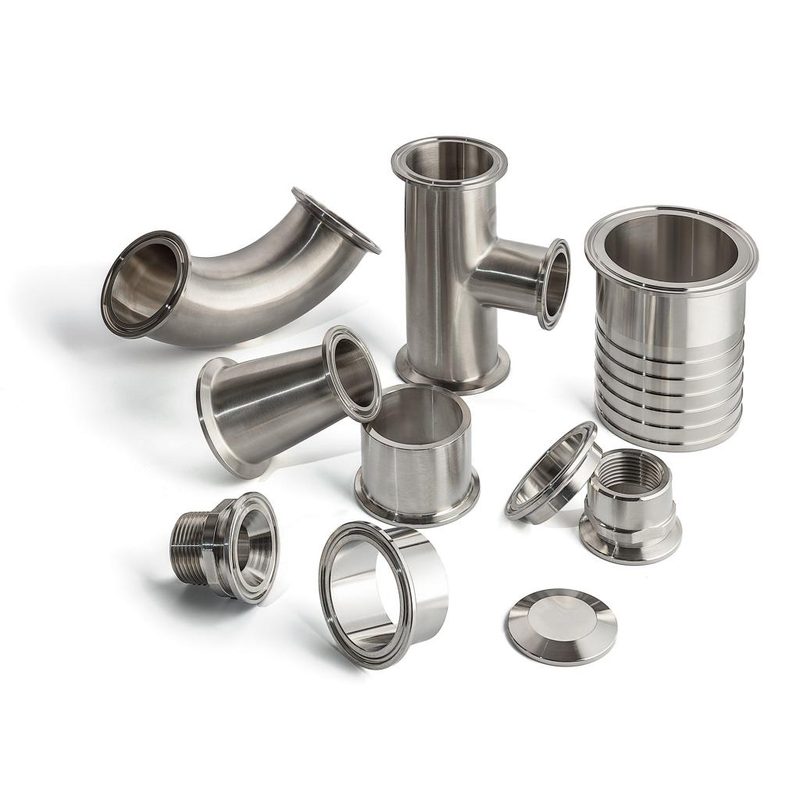
Both 304 and 316L stainless steel can be used to manufacture a wide range of sanitary pipe fittings.
Common products include:
Sanitary Elbows
Used to change the direction of fluid flow in sanitary piping systems.
Sanitary Tees
Designed to create branch connections and distribute fluids between different pipeline sections.
Sanitary Reducers
Connect pipes with different diameters while maintaining a suitable piping configuration.
Sanitary Ferrules
Provide connection ends for clamp-style sanitary piping assemblies.
Sanitary Clamps
Secure sanitary connections and allow convenient disassembly for inspection and maintenance.
Sanitary Unions
Provide detachable connections for equipment installation, replacement, and servicing.
Selecting the right material and fitting dimensions helps ensure compatibility and reliable system operation.
6. Why Surface Finish Matters in Sanitary Fittings
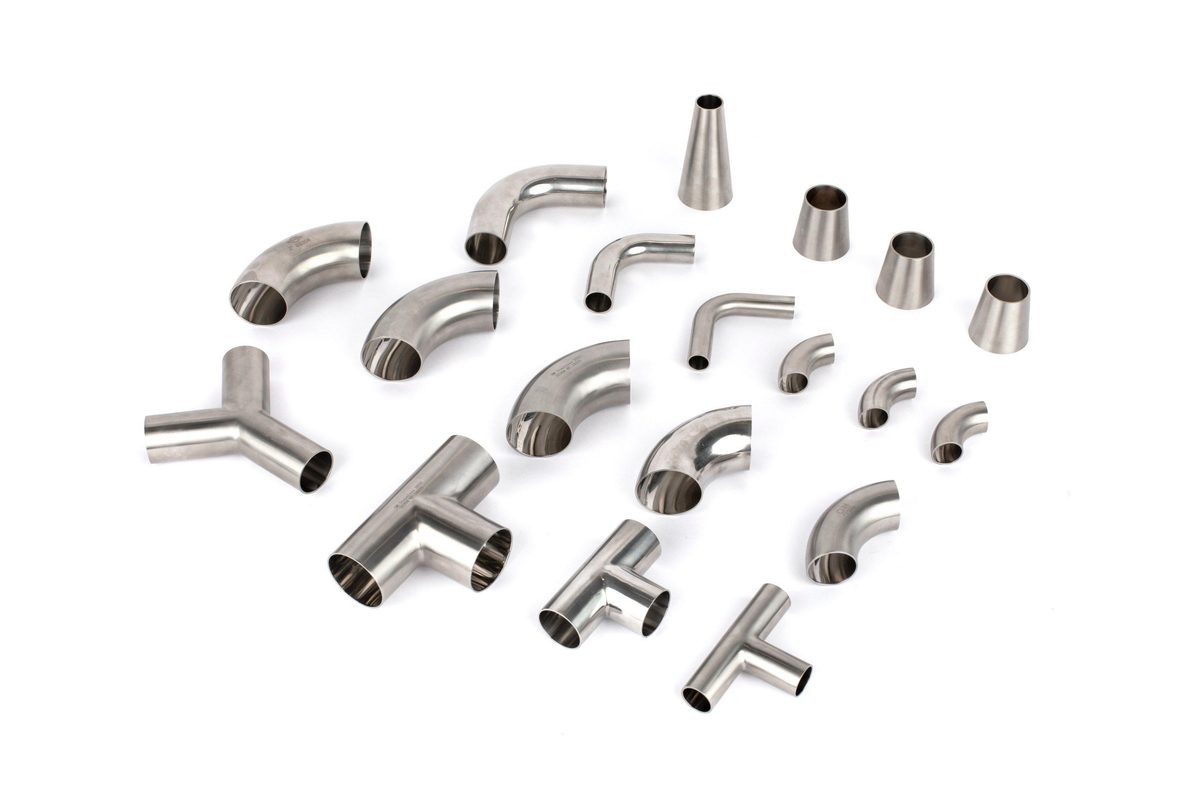
Material grade is important, but surface finish is another essential factor in hygienic piping applications.
A properly finished internal surface can help reduce product residue accumulation and facilitate cleaning.
When selecting sanitary fittings, consider:
- Internal surface roughness
- Polishing quality
- Welding quality
- Dimensional accuracy
- Cleaning and sterilization requirements
- Compatibility with the processing medium
For demanding hygienic applications, confirm the required surface finish and inspection criteria before purchasing.
7. How to Choose the Right Stainless Steel Sanitary Fittings
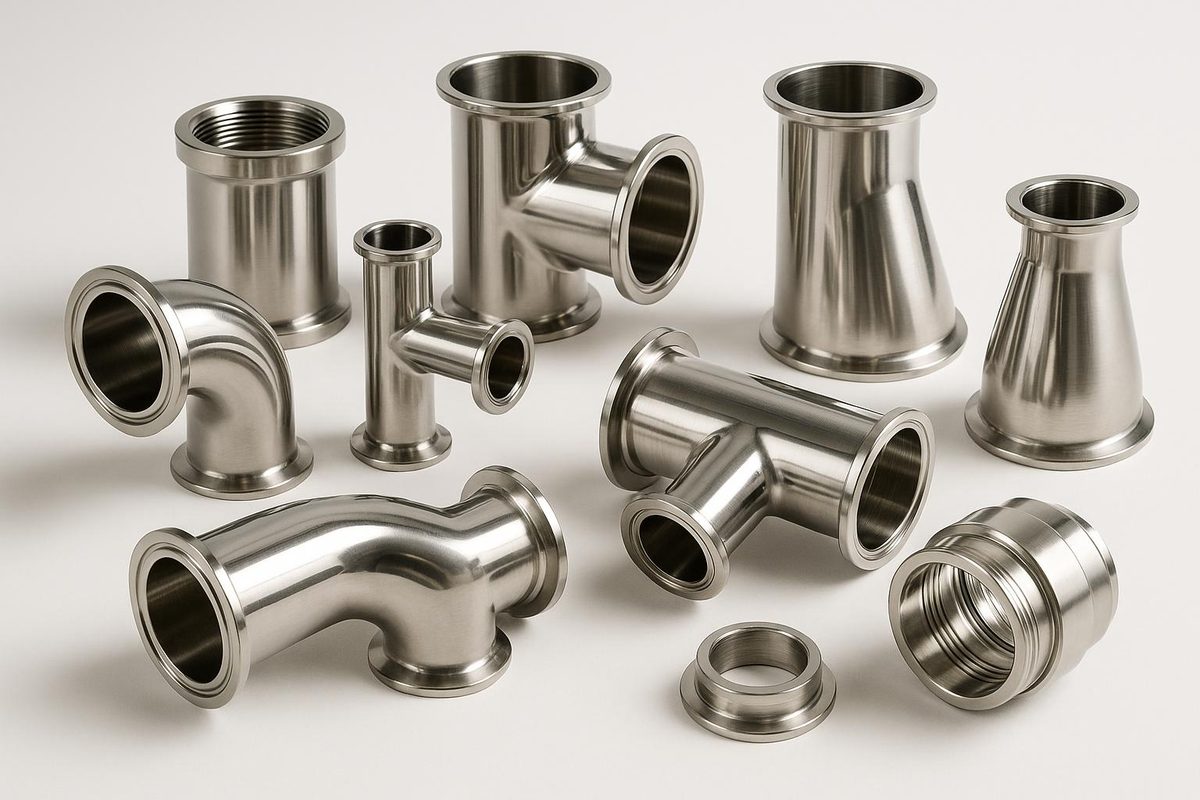
Before placing an order, buyers should evaluate several important factors:
1. Application Requirements
Identify the type of fluid, processing conditions, and operating environment.
2. Material Grade
Choose between 304 and 316L according to corrosion resistance requirements and project specifications.
3. Connection Type
Confirm whether you need clamp, welded, threaded, or other connection configurations.
4. Dimensions and Standards
Check pipe diameter, wall thickness, fitting dimensions, and applicable standards such as DIN, SMS, ISO, or 3A where required.
5. Surface Finish
Confirm the required internal and external surface finish.
6. Quality Documentation
Request relevant material certificates, dimensional inspection records, and other documentation required by your project.
Working with an experienced sanitary fittings supplier can help reduce material selection errors and improve purchasing efficiency.
Conclusion
Both 304 and 316L stainless steel are valuable materials for sanitary piping systems.
304 stainless steel is a cost-effective option for many general food and beverage applications, while 316L provides improved resistance to corrosion in more demanding environments.
The right choice depends on your processing medium, cleaning procedures, operating conditions, and technical requirements.
If you are looking for stainless steel sanitary fittings, including elbows, tees, reducers, ferrules, clamps, unions, and valves, selecting the correct material is an important first step.
Contact our team today to discuss your sanitary piping requirements and request a quotation for 304 or 316L stainless steel sanitary fittings.
