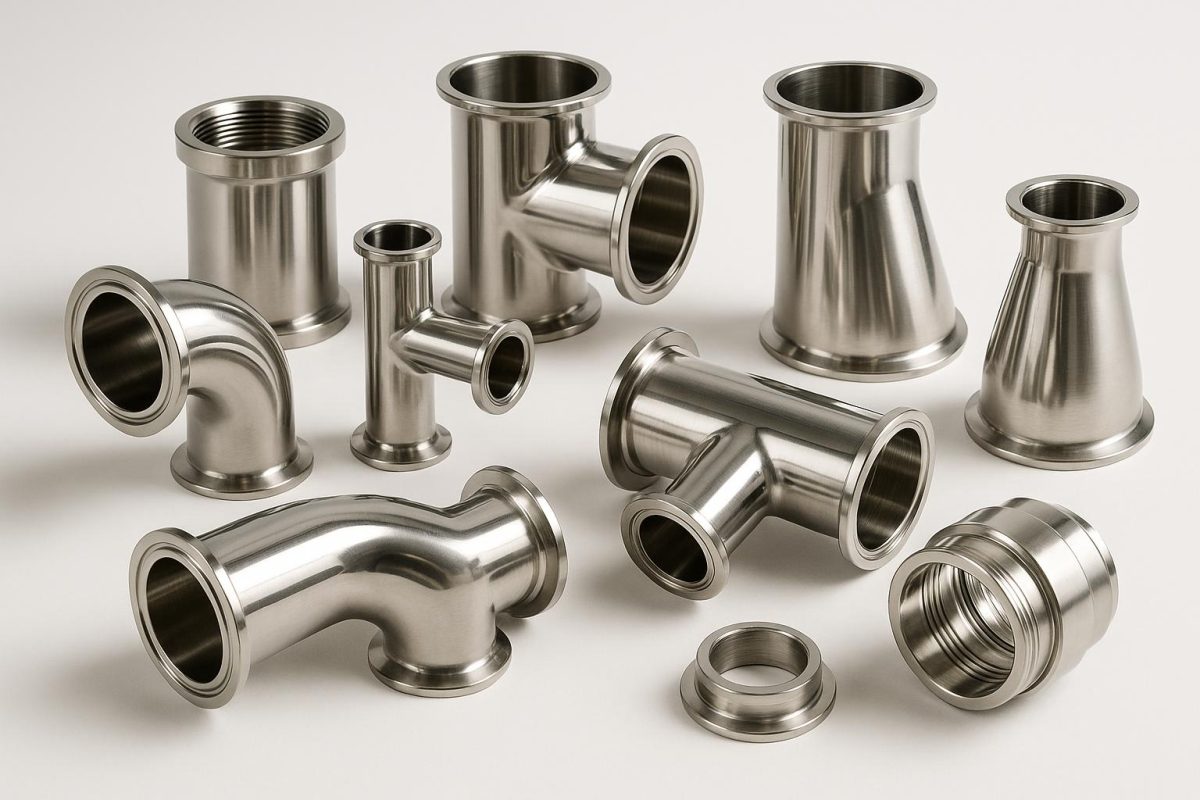
Stainless steel sanitary fittings play an important role in modern processing systems. They are widely used in food and beverage production, pharmaceutical manufacturing, dairy processing, biotechnology, and other industries where hygiene, durability, and reliable fluid transfer are essential.
Choosing the right sanitary fittings can help improve production efficiency, simplify cleaning procedures, and support the long-term performance of your piping system.
In this guide, we explain the key factors to consider when selecting stainless steel sanitary fittings for your application.
1. Understand the Application Requirements
Before selecting sanitary fittings, it is important to understand the working conditions of your processing system.
Consider the following factors:
- Working medium: Determine whether the system transports water, milk, beverages, chemicals, or other process fluids.
- Operating temperature: Check the normal operating and cleaning temperatures.
- Working pressure: Make sure the fittings are suitable for the system’s pressure requirements.
- Cleaning requirements: Consider whether the system uses CIP (Clean-in-Place) or SIP (Sterilization-in-Place) procedures.
- Installation environment: Evaluate humidity, corrosion exposure, and available installation space.
Understanding these conditions helps you select suitable materials, connection types, and product specifications.
2. Select the Appropriate Stainless Steel Material
Material selection is one of the most important considerations when purchasing sanitary fittings.
Two commonly used stainless steel grades are:
304 Stainless Steel
304 stainless steel offers good corrosion resistance and is commonly used in general food processing, beverage production, and water handling applications.
316L Stainless Steel
316L stainless steel contains molybdenum, which provides improved resistance to certain corrosive environments compared with 304 stainless steel. Its lower carbon content also makes it suitable for applications where welding and corrosion resistance are important considerations.
The right material depends on the process medium, cleaning chemicals, temperature, and operating environment.
3. Choose the Right Sanitary Fitting Types
Different piping systems require different fitting configurations.
Common stainless steel sanitary fittings include:
- Sanitary Elbows: Used to change the direction of fluid flow.
- Sanitary Tees: Used to create branch connections in piping systems.
- Sanitary Reducers: Connect pipes with different diameters.
- Sanitary Ferrules: Provide connection points for clamp-style assemblies.
- Sanitary Clamps: Secure detachable sanitary connections.
- Sanitary Unions: Allow convenient installation, removal, and maintenance.
Selecting the correct fitting type helps ensure compatibility and simplifies piping system installation.
4. Consider the Connection Method
Connection design affects installation, maintenance, and cleaning.
Common connection methods include:
Clamp Connections
Clamp connections are easy to assemble and disassemble. They are frequently used in sanitary piping systems that require regular inspection and cleaning.
Welded Connections
Welded connections provide permanent joints and are suitable for piping systems designed for continuous operation. Proper welding and finishing procedures are important for maintaining hygienic conditions.
Threaded or Other Mechanical Connections
Depending on the system design, threaded or other mechanical connections may also be used. Always confirm compatibility with the relevant equipment and piping standards.
5. Pay Attention to Surface Finish and Cleanability
In hygienic processing environments, internal surface quality is an important consideration.
A suitable surface finish can help reduce product residue accumulation and make cleaning easier.
When evaluating sanitary fittings, consider:
- Internal surface smoothness
- Welding quality
- Dimensional accuracy
- Product contact surface requirements
- Compatibility with cleaning procedures
For demanding applications, confirm the required surface finish and inspection criteria with your supplier before placing an order.
6. Check Dimensions and Industry Standards
Before purchasing sanitary fittings, confirm the following information:
- Pipe outside diameter
- Fitting size
- Wall thickness
- Connection type
- Material grade
- Applicable product standard
- Required certificates and inspection documents
Common sanitary piping standards include 3A, DIN, SMS, and ISO. The appropriate standard depends on your equipment design, market, and customer requirements.
Always verify dimensions and standard compatibility before ordering.
7. Why Choose a Reliable Sanitary Fittings Supplier?
A reliable supplier should be able to provide more than just products.
When evaluating a manufacturer or supplier, consider:
- Product range and manufacturing capabilities
- Material traceability
- Dimensional inspection
- Surface finish control
- Quality management procedures
- Technical support and communication
- Export packaging and delivery arrangements
Clear technical communication helps reduce purchasing risks and improves cooperation throughout the project.
Conclusion
Choosing the right stainless steel sanitary fittings requires careful consideration of material, application conditions, connection methods, surface finish, and dimensional standards.
Whether you are building a new processing line or upgrading an existing piping system, selecting suitable fittings is essential for reliable fluid transfer and hygienic operation.
If you are looking for stainless steel sanitary fittings, sanitary unions, clamps, valves, or customized piping components, contact our team to discuss your project requirements.
Contact us today to request product information and a quotation.
