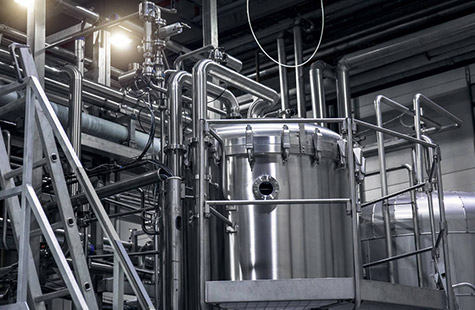
Sanitary fittings are widely used across various industries because of their hygienic design, corrosion resistance, durability, and reliable performance. They are particularly important in applications where cleanliness, product safety, and contamination control are critical.
1. Medical and Healthcare Industry
Hospitals and Clinics
Sanitary fittings can be used in certain medical and healthcare systems to connect fluid-handling equipment and process piping.
Depending on the specific application, they may be used in systems associated with medical equipment, cleaning systems, and other fluid transfer applications where hygienic conditions are required.
Laboratories
In biological, pharmaceutical, and chemical laboratories, sanitary fittings can be used in fluid transfer systems for reagents, process liquids, and other materials.
Their smooth surfaces and cleanable design can help reduce the potential for contamination and support hygienic processing environments.
2. Food and Beverage Industry
Food Processing
Sanitary fittings are widely used throughout food processing systems, from raw material transfer and processing to filling and packaging.
Their hygienic construction helps reduce contamination risks and supports the cleanliness requirements of food production systems.
Typical applications include:
- Food processing equipment
- Liquid transfer systems
- Mixing systems
- Filling equipment
- CIP cleaning systems
- Processing pipelines
Beverage Production
In beverage production, sanitary fittings are used to connect piping and equipment for transferring raw materials, intermediate products, and finished beverages.
Common applications include:
- Juice processing
- Soft drinks
- Bottled water
- Brewing
- Beverage filling systems
Dairy Processing
Dairy production requires strict hygiene and effective cleaning procedures.
Sanitary fittings are commonly used in dairy processing systems because their smooth surfaces and hygienic connections can facilitate cleaning and help reduce areas where product residues may accumulate.
3. Pharmaceutical Industry
Pharmaceutical Manufacturing
Sanitary fittings are widely used in pharmaceutical processing systems for transferring raw materials, intermediates, purified water, and finished products.
The fittings are typically manufactured from stainless steel and can be supplied with different surface finishes and connection configurations according to the requirements of the application.
They can be found in systems involving:
- Pharmaceutical production
- Purified water
- Process fluids
- Cleaning systems
- Biopharmaceutical processing
Pharmaceutical Equipment
Sanitary fittings can also be used to connect different types of pharmaceutical processing equipment, including:
- Mixing tanks
- Reactors
- Filters
- Storage tanks
- Process vessels
- Transfer systems
Proper material selection, surface finish, connection type, and cleaning requirements should be considered for each application.
4. Chemical Industry
Chemical Processing
Sanitary fittings can be used in selected chemical processing applications where hygienic design, corrosion resistance, and cleanable connections are required.
The appropriate stainless steel grade and sealing materials should be selected according to the chemical properties of the process medium.
Corrosive Media Transfer
For corrosive or aggressive media, the fitting material and sealing system need to be carefully selected.
Depending on the operating conditions, stainless steel sanitary fittings can provide reliable connections for certain chemical fluid transfer applications while helping reduce the risk of leakage and corrosion.
5. Other Industrial Applications
Sanitary fittings can also be found in various other industrial applications where cleanable, corrosion-resistant, and reliable fluid connections are required.
Chemical and Industrial Processing
Some industrial chemical processing systems use sanitary-style fittings in specific sections of their piping systems, particularly where cleanability and corrosion resistance are important.
Water Treatment
Certain water treatment and fluid handling systems may also use sanitary fittings where hygienic connections and corrosion resistance are required.
The exact fitting type should be selected based on the fluid, pressure, temperature, connection standard, and applicable industry requirements.
Why Choose Sanitary Fittings?
The main advantages of sanitary fittings include:
- Hygienic design
- Smooth internal surfaces
- Corrosion resistance
- Easy cleaning and maintenance
- Reliable connections
- Stainless steel construction
- Multiple connection options
- Wide range of applications
Common connection types include Tri-Clamp, butt weld, threaded, and flanged connections, depending on the product design and application requirements.
Conclusion
Sanitary fittings play an important role in food processing, beverage production, dairy processing, pharmaceutical manufacturing, biotechnology, chemical processing, laboratories, and other fluid handling applications.
Their hygienic design, stainless steel construction, corrosion resistance, cleanability, and flexible connection options make them suitable for a wide range of processing systems.
When selecting sanitary fittings, it is important to consider the material, size, connection type, surface finish, operating pressure, temperature, process medium, and applicable industry standards.
For manufacturers and system integrators, selecting the correct sanitary fitting for each application can help improve system reliability, simplify cleaning and maintenance, and support long-term operating performance.
