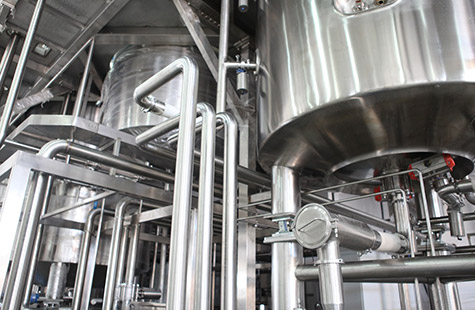
A sanitary ball valve is a widely used valve designed for hygienic fluid control in industries such as food processing, beverage production, pharmaceuticals, biotechnology, and other applications where cleanliness and reliable sealing are important.
With its hygienic construction, excellent sealing performance, low flow resistance, and easy operation, the sanitary ball valve is suitable for a wide range of fluid handling systems.
Applications of Sanitary Ball Valves
1. Food and Beverage Industry
Sanitary ball valves are commonly used in food and beverage processing lines to control the flow of raw materials, liquids, and finished products.
Their hygienic design, smooth internal surfaces, and reliable sealing performance help reduce the risk of contamination and make them suitable for applications where cleanliness is critical.
Typical applications include:
- Dairy processing
- Beverage production
- Food processing
- Brewing systems
- Liquid transfer systems
- CIP cleaning systems
2. Pharmaceutical Industry
Sanitary ball valves are also widely used in pharmaceutical processing and purified water systems.
Their stainless steel construction and hygienic design can meet the requirements of applications where corrosion resistance, cleanability, and reliable fluid control are important.
They can be used in:
- Purified water systems
- Pharmaceutical production lines
- Process fluid systems
- Cleaning systems
- Biopharmaceutical equipment
3. Other Industrial Applications
In addition to food and pharmaceutical applications, sanitary ball valves can also be used in a variety of industrial systems, including:
- Chemical processing
- Biotechnology
- Agricultural equipment
- Brewing equipment
- Vacuum equipment
- Industrial fluid handling
- Aerospace-related equipment
The appropriate valve material, seal material, pressure rating, temperature rating, and connection type should be selected according to the actual operating conditions.
Key Features of Sanitary Ball Valves
1. Hygienic Design
Sanitary ball valves are commonly manufactured from stainless steel such as 304 or 316 stainless steel.
The valve surfaces can be polished to provide a smooth finish and help reduce areas where product residue or contaminants can accumulate.
This makes sanitary ball valves suitable for applications requiring high levels of cleanliness and easy cleaning.
2. Excellent Sealing Performance
The ball inside the valve rotates around the valve stem axis.
When the stem rotates approximately 90 degrees, the flow passage of the ball aligns with the inlet and outlet when the valve is open. When rotated to the closed position, the ball blocks the flow path.
This quarter-turn design provides fast operation and reliable shut-off performance.
3. Low Flow Resistance
Many sanitary ball valves use a full-port or relatively unobstructed flow path.
When fully open, the fluid can pass through the valve with relatively low resistance, helping reduce pressure loss within the piping system.
This design is particularly useful in fluid transfer applications where maintaining efficient flow is important.
4. Compact and Lightweight Construction
Sanitary ball valves generally feature a compact construction with relatively small dimensions and low weight.
Compared with some other valve types, their quarter-turn operating mechanism can also provide convenient operation.
This makes them easier to install, operate, and maintain in sanitary piping systems.
5. Wide Range of Applications
Sanitary ball valves are available in different sizes, connection types, materials, seal configurations, and operating methods.
Depending on the specific design, they can be used in different temperature, pressure, and fluid-handling conditions.
Common connection options include:
- Tri-Clamp
- Welded connection
- Threaded connection
- Flanged connection
The valve should always be selected according to the actual application requirements and applicable standards.
6. Easy Maintenance
Many sanitary ball valves are designed with removable components, making inspection, cleaning, and replacement of seals and other wear parts relatively convenient.
Regular maintenance can help maintain sealing performance and extend the service life of the valve.
Conclusion
Sanitary ball valves are widely used in food processing, beverage production, pharmaceutical, biotechnology, brewing, chemical, and other hygienic fluid handling applications.
Their main advantages include:
- Hygienic stainless steel construction
- Excellent sealing performance
- Low flow resistance
- Compact design
- Easy operation
- Easy cleaning and maintenance
- Multiple connection options
- Wide range of applications
When selecting a sanitary ball valve, factors such as valve size, material, connection type, operating temperature, working pressure, sealing material, and the characteristics of the process medium should be considered.
Proper installation, operation, cleaning, and maintenance are also important for ensuring reliable valve performance and long service life.
