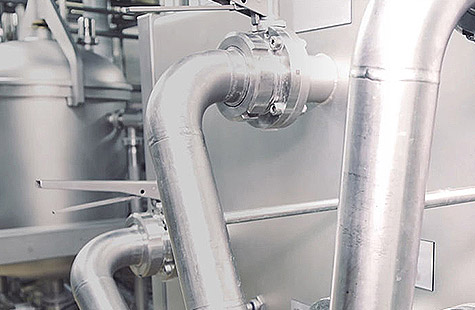
The food processing industry has strict requirements for sanitary fittings because these components are directly involved in the transportation and processing of food, beverages, and other consumable products.
Sanitary fittings must provide high levels of hygiene, corrosion resistance, temperature resistance, reliable sealing, compatibility, and ease of cleaning and maintenance.
This article explains the key characteristics and requirements of sanitary fittings for food processing applications.
1. High Hygiene Standards
Hygiene is one of the most important requirements for sanitary fittings used in food processing.
Because the fittings may come into direct or indirect contact with food products, their materials, surface finish, internal geometry, and cleanability are critical.
High-quality sanitary fittings are commonly manufactured from stainless steel, particularly grades selected for their corrosion resistance and suitability for hygienic applications.
Important hygiene-related requirements include:
- Smooth internal surfaces
- Low surface roughness
- Corrosion resistance
- Easy cleaning
- Minimal product retention
- Reduced risk of bacterial accumulation
- Compatibility with cleaning and sanitizing processes
A properly designed sanitary fitting should minimize dead spaces and areas where food residues or contaminants could accumulate.
This makes the fitting easier to clean and helps maintain hygienic conditions throughout the processing system.
2. Corrosion and Temperature Resistance
Food processing systems may expose sanitary fittings to water, acids, alkaline solutions, cleaning chemicals, steam, and other aggressive media.
Therefore, sanitary fittings need appropriate corrosion resistance to maintain long-term performance.
Some food processing applications also involve elevated temperatures, such as:
- Pasteurization
- Sterilization
- Cooking
- Hot-water cleaning
- Steam cleaning
The selected sanitary fitting must be suitable for the actual operating temperature and pressure of the system.
Material selection should consider both the process medium and the cleaning chemicals used during routine sanitation.
For demanding applications, the manufacturer should provide appropriate material and temperature specifications.
3. Reliable Sealing and Low Flow Resistance
Reliable sealing is another important requirement for sanitary fittings used in food processing systems.
A good connection should help prevent:
- Product leakage
- External contamination
- Air ingress
- Loss of system pressure
- Cross-contamination
The sealing system should be selected according to the application, temperature, pressure, and working medium.
Common connection and sealing solutions include:
- Tri-clamp connections
- Sanitary unions
- Welded connections
- Gasket seals
- O-rings
In addition to sealing performance, the internal design of the fitting should provide efficient fluid flow.
Smooth internal surfaces and properly designed flow passages can help reduce unnecessary pressure loss and improve conveying efficiency.
4. Standardization and Compatibility
Standardization is particularly important for modern food processing systems.
Standardized sanitary fittings allow different components, pipelines, pumps, valves, tanks, and processing equipment to be connected more easily.
Common considerations include:
- Fitting dimensions
- Tube sizes
- Connection standards
- Gasket dimensions
- Clamp compatibility
- Valve compatibility
- Equipment interfaces
Using standardized components can simplify equipment installation, replacement, maintenance, and spare-parts management.
It can also make it easier for food processing companies to expand or modify their production lines.
5. Easy Installation and Maintenance
Sanitary fittings should be designed for convenient installation, inspection, cleaning, and maintenance.
Fittings that can be quickly installed and removed can reduce maintenance time and production downtime.
This is especially important in food and beverage processing facilities where cleaning and sanitation are performed regularly.
Key considerations include:
- Easy assembly and disassembly
- Convenient inspection
- Simple gasket replacement
- Easy access for cleaning
- Reliable connection
- Compatibility with automated cleaning systems
6. CIP and SIP Compatibility
Modern food processing systems commonly use automated cleaning and sanitation procedures.
CIP – Clean-in-Place
CIP (Clean-in-Place) allows processing equipment and piping systems to be cleaned without extensive disassembly.
Sanitary fittings used in CIP systems should have a hygienic internal design that allows cleaning fluids to reach the relevant surfaces effectively.
The design should minimize:
- Dead legs
- Product retention areas
- Sharp internal transitions
- Difficult-to-clean spaces
SIP – Sterilization-in-Place
SIP (Sterilization-in-Place) uses heat or steam to sterilize process equipment and piping systems.
Sanitary fittings used in SIP applications need to be compatible with the applicable temperature, pressure, and sterilization process.
The fitting material and gasket or sealing material should therefore be selected according to the actual SIP conditions.
7. Material Selection for Sanitary Fittings
Material selection is an important part of sanitary fitting design.
Stainless steel is widely used in food processing applications because of its combination of:
- Corrosion resistance
- Durability
- Cleanability
- Mechanical strength
- Hygienic surface characteristics
The appropriate stainless steel grade and surface finish should be selected according to the process requirements.
Other factors to consider include:
- Product characteristics
- Cleaning chemicals
- Operating temperature
- Operating pressure
- Required surface finish
- Applicable industry standards
For critical applications, material and surface-finish requirements should be confirmed with the equipment or fitting manufacturer.
8. Why Sanitary Fittings Matter in Food Processing
The performance of sanitary fittings can directly affect the reliability and hygiene of a food processing system.
Properly selected and installed fittings can help manufacturers:
- Maintain hygienic production conditions
- Reduce contamination risks
- Improve cleaning efficiency
- Reduce maintenance time
- Improve process reliability
- Minimize leakage
- Support efficient fluid transportation
For this reason, sanitary fittings should be considered as an important part of the overall hygienic design of a food processing system.
Conclusion
The food processing industry requires sanitary fittings with high hygiene standards, corrosion resistance, temperature resistance, reliable sealing, standardized connections, and easy maintenance.
Fittings should also be compatible with cleaning and sterilization processes such as CIP and SIP.
When selecting sanitary fittings, manufacturers should consider the working medium, temperature, pressure, cleaning chemicals, connection type, surface finish, and applicable industry requirements.
Choosing the appropriate sanitary fittings can help improve the reliability, cleanability, and long-term performance of food processing pipelines and equipment.
